

Green and black olives are popular ingredients in Mediterranean cooking. They add a savory flavor to salads, sandwiches, pasta, pizzas, and appetizers. But when comparing green vs. black olives, which is the healthier choice?
The answer is not as simple as choosing one color over the other. Both types provide healthy fats and other beneficial plant compounds. However, their nutritional values can differ depending on the olive variety, ripeness, curing method, and amount of sodium added during processing.
In this guide, you will learn how green and black olives compare in calories, fat, sodium, flavor, and potential health benefits, plus how to choose the best option for your meals.
Green vs. Black Olives: What Is the Main Difference?
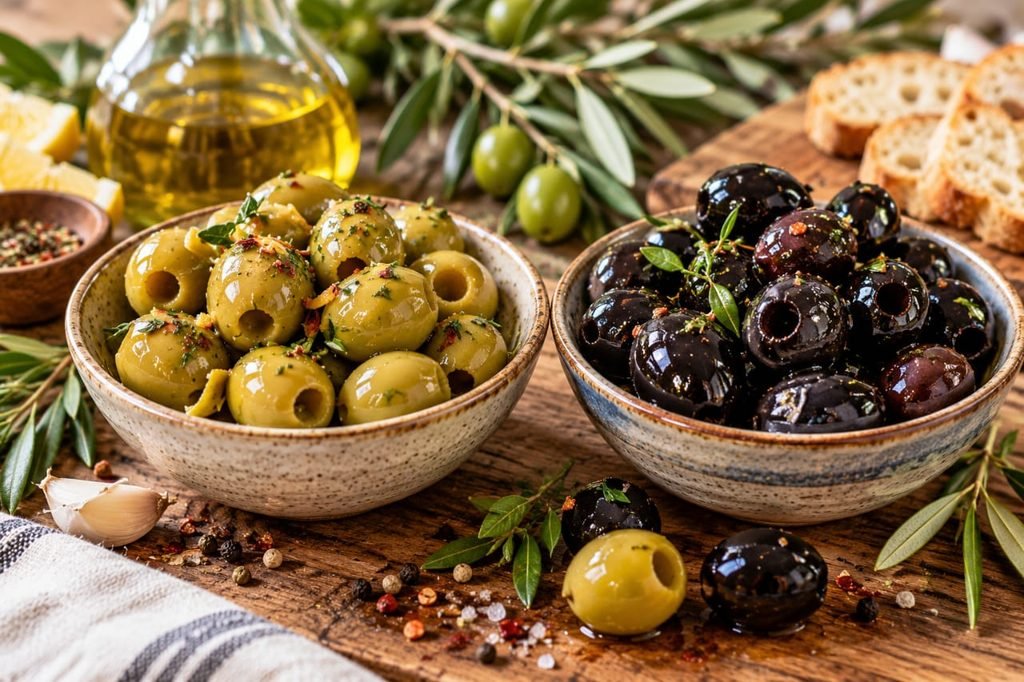
The main difference between green and black olives is often their stage of ripeness when harvested. Green olives are generally picked before they are fully ripe, while many naturally dark olives are harvested later. However, olive color also depends on the variety and how the olives are processed.
Both green and black olives usually need curing or other processing before they are ready to eat. Freshly picked olives are naturally very bitter, so producers use methods such as brining, water curing, or other treatments to make them more palatable.
- Green olives: Often have a firmer texture and a sharper, more bitter or tangy flavor.
- Black olives: Often have a milder flavor and a softer texture, although this varies by variety and processing method.
- Processed black olives: Some canned black olives are harvested while still green and darkened through controlled oxidation during processing.
Because there are many olive varieties and processing methods, color alone does not tell you everything about an olive’s nutritional value.
Green vs. Black Olives Nutrition Facts
Both green and black olives contain mostly fat, including monounsaturated fat, along with smaller amounts of carbohydrates and other nutrients. They also provide plant compounds, including polyphenols, although the amounts vary among olive varieties and processing methods.
The following comparison uses an example serving of approximately 34 grams, or about 10 small-to-medium olives, based on nutrition figures reported by Healthline. These are illustrative values, not universal figures for every brand or variety.
| Nutrient | Black Olives | Green Olives |
|---|---|---|
| Calories | About 36 | About 49 |
| Total fat | About 3 g | About 5 g |
| Carbohydrates | About 2 g | About 1 g |
| Sodium | About 11% of the Daily Value | About 23% of the Daily Value |
Note: Nutrition values can vary considerably with serving size, olive type, brand, curing method, and brine concentration. Check the nutrition label on your specific product for the most accurate information.
Which Olives Have Fewer Calories?
In the example above, black olives have fewer calories per serving than green olives. However, this does not mean every black olive product is lower in calories. Serving size and the type of olive matter, so compare nutrition labels when calorie intake is a priority.
Which Olives Have More Healthy Fats?
Olives contain fat, much of which is monounsaturated fat, including oleic acid. This type of fat is a characteristic part of the Mediterranean dietary pattern.
Green olives may contain more fat per serving in some comparisons, but the difference depends on the variety and serving size. Neither color should automatically be considered the better source of healthy fats.
Which Olives Have More Sodium?
Sodium is one of the most important factors to consider when choosing olives. Many olives are cured or stored in salty brine, and the amount of sodium can differ significantly between products.
Some green olives contain more sodium than some black olives, as shown in the example comparison above. However, this is not a rule that applies to every product. Always check the nutrition label, especially if you are watching your sodium intake.
Are Green or Black Olives Healthier?
Neither green nor black olives are automatically healthier in every situation. Both can fit into a balanced eating pattern. Your best choice depends on your nutritional goals, the product’s ingredients, its sodium content, and how much you eat.
Potential Benefits of Both Green and Black Olives
1. They Provide Monounsaturated Fats
Olives contain monounsaturated fats, including oleic acid. Replacing some sources of saturated fat with unsaturated fats can support a heart-healthy eating pattern. The overall quality of your diet matters more than the color of the olives you choose.
2. They Contain Antioxidant Plant Compounds
Olives contain plant compounds such as polyphenols, which have antioxidant activity. The types and amounts of these compounds vary with the olive variety, ripeness, and processing method. It is therefore difficult to say that all green olives contain more antioxidants than all black olives, or vice versa.
3. They Add Flavor to Balanced Meals
Olives can make vegetables, salads, whole grains, and other dishes more flavorful. Their strong taste may help you add variety to everyday meals without relying on heavy sauces. Because olives can be salty, it is useful to balance them with fresh ingredients and other lower-sodium foods.
4. They Can Fit into a Mediterranean-Style Diet
Olives are a familiar part of Mediterranean cuisine, alongside vegetables, legumes, whole grains, nuts, and olive oil. A balanced Mediterranean-style eating pattern emphasizes a variety of plant foods and healthy fat sources rather than relying on one individual ingredient.
Why Are Some Black Olives Sold in Cans?
Not every black olive becomes dark naturally on the tree. Some commercially available canned black olives are harvested before full ripeness and darkened through a controlled oxidation process. Processing can help create a consistent dark color and a mild flavor.
Other olives turn dark naturally as they ripen. Different varieties can also have different shades, textures, and flavors.
When buying black olives, read the ingredient list and product description if you want to know how they were prepared. The word “black” alone does not tell you whether the olives were naturally ripened or darkened during processing.
Green Olives vs. Black Olives: Taste and Best Uses
The best olive for your dish often depends on the flavor and texture you prefer.
| Dish or Use | Green Olives | Black Olives |
|---|---|---|
| Salads | Add a tangy, briny flavor | Offer a milder, savory taste |
| Pizza | Work well when you want a sharper flavor | Are a popular choice for a milder olive taste |
| Sandwiches and wraps | Add a firm, tangy bite | Blend easily into many fillings |
| Tapenade and spreads | Can create a bold, briny spread | Can create a rich, mellow spread |
| Snacks and appetizers | Suit people who enjoy a stronger flavor | Suit people who prefer a milder taste |
These are general flavor suggestions rather than strict rules. The variety and curing method can make two olives of the same color taste quite different.
How to Choose the Healthiest Olives
If you want to enjoy olives while keeping your meals balanced, use these practical tips when shopping.
- Compare sodium levels: Choose a lower-sodium product when available, particularly if you need to limit sodium in your diet.
- Check the serving size: A label may list nutrition for a small portion, so compare products using similar serving sizes.
- Rinse olives if appropriate: Draining and rinsing brined olives may reduce some surface salt, although the amount removed varies.
- Read the ingredient list: Look at the brine, added ingredients, and processing details if these matter to you.
- Keep portions in mind: Olives are flavorful, but their calories and sodium can add up when you eat large amounts.
- Consider your overall diet: Pair olives with vegetables, beans, whole grains, and other nutrient-rich foods.
If you have been advised to restrict sodium because of a health condition, follow your healthcare professional’s guidance and compare product labels carefully.
Frequently Asked Questions
Are green olives healthier than black olives?
Not necessarily. Both provide monounsaturated fats and plant compounds. The healthier choice depends on the variety, processing method, sodium content, serving size, and your dietary needs.
Which olives have fewer calories?
Some black olives have fewer calories per serving than green olives, but this varies by product. Compare nutrition labels and serving sizes rather than relying on color alone.
Are black olives naturally black?
Some black olives become dark as they ripen, while some canned black olives are harvested earlier and darkened during processing. Check the product description or ingredient list to learn more about a specific product.
Do green olives contain more sodium than black olives?
Some green olives contain more sodium than some black olives, but there is no universal rule. Sodium levels depend on the brand, brine, curing process, and serving size.
Can I eat olives every day?
Many people can include moderate portions of olives in a balanced diet. The right amount depends on your overall eating pattern and nutritional needs. Pay particular attention to sodium if you need to limit salt.
Should I rinse olives before eating them?
Rinsing drained olives may remove some surface brine and salt. It will not necessarily remove all the sodium, so checking the nutrition label remains important.
The Bottom Line: Green vs. Black Olives
When comparing green vs. black olives, there is no single winner for everyone. Both can add flavor, monounsaturated fats, and beneficial plant compounds to a balanced diet. Their nutritional differences depend on more than color, including ripeness, variety, curing, and processing.
If your priority is reducing sodium, compare labels and choose a product with less sodium per serving. If you are focused on calories, compare serving sizes and total calories. And if you are choosing olives for a recipe, let your preferred taste and texture guide you.
Ultimately, the healthiest choice is the one that fits your needs and helps you enjoy a varied, balanced diet.
Sources and Further Reading
- Healthline: Olives 101 — Nutrition Facts and Health Benefits
- Healthline: Can Olives Help You Lose Weight?
- Cleveland Clinic: 7 Reasons Why Olives Are Healthy for You
- Scientific Review: Table Olives and Health










One Comment